
Prenatal Down Syndrome Testing
Prenatal Down Syndrome Testing
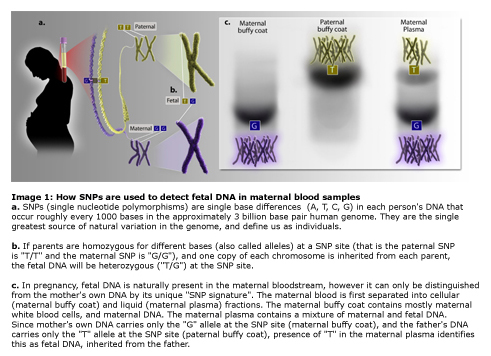
Our goal is to develop a fetal DNA based sequencing method to allow for safe, noninvasive, and accurate prenatal diagnosis of genetic disorders early in pregnancy.
Ravgen published its noninvasive prenatal testing technology in a two-step process. In 2004, our first paper in the Journal of the American Medical Association (JAMA) described the methods to increase the percentage of fetal DNA present in a tube of blood from the mother by adding a fixative to prevent maternal cell lysis. In 2007, a second publication in The Lancet presented a study showcasing its ability to use this technology to detect the presence of all or part of a third copy of chromosome 21 in Down syndrome from a blood draw using Ravgen’s non-hybridization- based DNA sequencing method. Ravgen has spent over a decade developing noninvasive prenatal Down testing and it continues to be under research and development at this time.
Commonly Asked Questions
How is our DNA Prenatal Paternity Testing done?
We have sites all over the United States for sample collections. Please contact Ravgen at (410) 715-2111 to make convenient arrangements.
Do you offer testing outside of the United States?
Currently, samples are only collected from the United States and Canada due to the limitations of fetal DNA while shipping.
Do we have to go to an appointment together?
Can I bring in a sample for the alleged father?
We can test other samples besides the standard buccal swab collection, but there is an additional fee included. Please feel free to call the lab at (410) 715-2111 to discuss viable sample options.
How accurate is our DNA Prenatal Paternity Test?
DNA prenatal paternity testing can either exclude or confirm a father. Our test is over 99% accurate.
How early can you detect fetal DNA?
Fetal DNA can be detected as early as 5 weeks and rises rapidly throughout the first trimester.
What kind of things can you test for with fetal DNA?
We can test for a number of single gene disorders including: cystic fibrosis, sickle cell, and the Jewish panel. In addition to single gene disorders, we also offer noninvasive prenatal DNA paternity testing.
Can cells last from a previous pregnancy?
In the mother’s blood, there are intact fetal cells and free-floating fetal DNA that were released from fetal cells destroyed by the mother’s immune system. While it is thought that a few rare intact fetal cells can escape the mother’s immune system and persist from previous pregnancies, free-floating fetal DNA can only last for a few hours. Therefore, all of our tests are based on free-floating fetal DNA present in the mother’s blood rather than intact fetal cells. It has been well shown that free-floating fetal DNA cannot exist from previous pregnancies.
Is this technology approved by any governing bodies?
Ravgen has been recognized and approved by the College of American Pathologists (CAP) and has received a certificate of accreditation under the Clinical Laboratory Improvement Amendments (CLIA).
Has this technology been published?
Ravgen, Inc. has published the basis of this technology in top medical journals such as the New England Journal of Medicine, The Lancet, and the Journal of the American Medical Association. Please browse under our News & Publications tab for additional publications.
Do you have a payment plan?
Yes, we do! Please call our lab at (410) 715-2111 to discuss our options.